Starting off with Truck Fleet Maintenance: How to Cut Costs Efficiently, this introductory paragraph aims to grab the readers' attention and provide a brief overview of the topic in a clear and engaging manner.
The following paragraph will delve deeper into the specifics and importance of efficient cost-cutting measures in truck fleet maintenance.
Benefits of Regular Maintenance
Regular maintenance is crucial for a truck fleet to ensure optimal performance and reduce overall costs. By staying proactive and consistent with maintenance schedules, fleet managers can reap numerous benefits that contribute to the efficiency and longevity of their vehicles.
Cost Savings
- Preventive maintenance helps identify and address small issues before they escalate into major problems, reducing the need for costly repairs.
- Regularly servicing vehicles can improve fuel efficiency, saving money on fuel costs in the long run.
- Well-maintained trucks are less likely to break down unexpectedly, minimizing downtime and loss of revenue.
Longevity of Vehicles
Regular maintenance plays a key role in extending the lifespan of trucks within a fleet. By keeping all components in optimal condition, vehicles are less prone to wear and tear, ultimately increasing their longevity. Additionally, routine maintenance ensures that trucks operate at peak performance levels, contributing to their overall durability and reliability on the road.
Strategies for Cost-Effective Maintenance
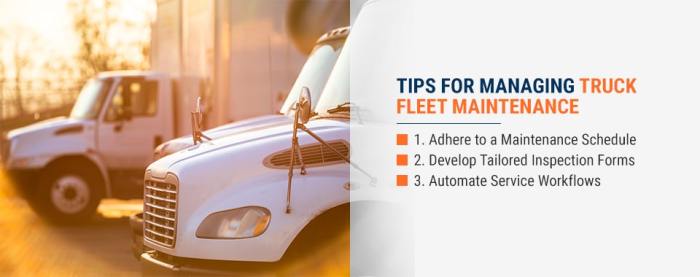
Negotiating maintenance contracts with service providers can be a key strategy in cutting costs efficiently. By ensuring clear terms, pricing, and service level agreements, you can optimize your maintenance budget and avoid unexpected expenses.
The Benefits of In-House Maintenance versus Outsourcing
When deciding between in-house maintenance and outsourcing, consider factors like the size of your fleet, available resources, and expertise. In-house maintenance can offer more control and potentially lower costs in the long run, but outsourcing can provide specialized skills and flexibility.
Analyze your specific needs to determine the most cost-effective approach for your truck fleet.
The Impact of Preventative Maintenance Schedules on Cost Reduction
Implementing preventative maintenance schedules can significantly reduce costs by preventing major breakdowns and extending the lifespan of your vehicles. By regularly servicing your trucks, you can catch small issues before they escalate into costly repairs. This proactive approach not only saves money but also minimizes downtime, keeping your fleet running smoothly and efficiently.
Technology in Fleet Maintenance
In today's fast-paced world, technology plays a crucial role in optimizing fleet maintenance processes and reducing costs. By leveraging advanced tools and software, companies can streamline their maintenance schedules, implement predictive maintenance strategies, and detect issues early on to prevent costly repairs.
Telematics Systems for Maintenance Optimization
Telematics systems are a game-changer in fleet maintenance, providing real-time data on vehicle performance, fuel consumption, and maintenance needs. By analyzing this data, fleet managers can optimize maintenance schedules, ensuring that vehicles are serviced exactly when needed to prevent breakdowns and reduce overall maintenance costs.
Predictive Maintenance Software for Cost Reduction
Predictive maintenance software utilizes data analytics and machine learning algorithms to predict when a vehicle component is likely to fail. By identifying potential issues before they occur, companies can proactively replace parts during scheduled maintenance, reducing downtime and avoiding costly emergency repairs
This proactive approach not only saves money but also increases the lifespan of the fleet.
Benefits of Diagnostic Tools for Early Issue Detection
Diagnostic tools, such as onboard diagnostic scanners and handheld devices, enable technicians to quickly identify and diagnose vehicle problems. By detecting issues early on, fleet managers can address minor repairs before they escalate into major breakdowns, saving both time and money.
These tools also help in improving fuel efficiency, reducing emissions, and ensuring the safety of drivers and cargo.
Training and Skill Development
Training programs for maintenance staff are essential in ensuring that technicians have the necessary knowledge and skills to effectively maintain and repair fleet vehicles. By investing in training, companies can improve the overall efficiency of their maintenance operations and reduce the likelihood of costly mistakes.
Importance of Training Programs
- Training programs help technicians stay up-to-date with the latest technologies and maintenance practices, allowing them to work more efficiently.
- Well-trained technicians are better equipped to diagnose and address issues promptly, reducing downtime and preventing more significant problems.
- Continuous education can enhance the quality of work, leading to fewer repeat repairs and increased overall vehicle reliability.
Enhancing Technicians’ Skills for Cost-Efficient Repairs
- Technicians with advanced skills can perform repairs more quickly and accurately, reducing labor costs and minimizing the need for outsourcing.
- Skilled technicians are more adept at identifying cost-effective solutions and optimizing maintenance schedules to prevent breakdowns and extend vehicle lifespan.
- Investing in training can ultimately lead to long-term cost savings by improving the efficiency and effectiveness of maintenance operations.
Impact of Continuous Education on Maintenance Processes
- Continuous education fosters a culture of learning and improvement within the maintenance team, encouraging innovation and the adoption of best practices.
- Technicians who receive ongoing training are more motivated and engaged in their work, leading to higher job satisfaction and lower turnover rates.
- By staying informed about industry trends and advancements, maintenance staff can proactively address issues and implement preventative maintenance measures, reducing unexpected expenses.
Ultimate Conclusion
Concluding our discussion on Truck Fleet Maintenance: How to Cut Costs Efficiently, this final paragraph summarizes the key points discussed and leaves readers with food for thought on implementing cost-effective strategies.
FAQ Explained
What are the benefits of regular maintenance for a truck fleet?
Regular maintenance ensures optimal performance, extends vehicle lifespan, and reduces unexpected repair costs.
How can telematics systems optimize maintenance schedules?
Telematics systems use data to track vehicle health and performance, allowing for timely maintenance based on actual usage and condition.
Why is training important for maintenance staff?
Training enhances skills, improves repair efficiency, and ensures technicians are up-to-date with the latest maintenance practices.